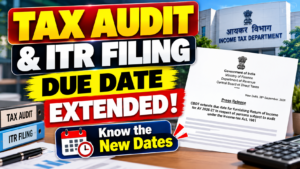
In 2026, certain senior citizens can be exempted from filing an Income Tax Return (ITR), but this benefit is available only under specific conditions. As per the provisions, a resident individual aged 75 years or above may not be required to file an ITR if their income is limited and falls within a defined scope. This relief is designed to reduce compliance burden for elderly taxpayers who have simple income structures.
To avail this exemption, the senior citizen’s income must consist only of pension and interest income, and importantly, the interest income should be from the same bank in which the pension is received. In such cases, the bank takes responsibility for computing the total income of the individual. It considers applicable deductions and rebate, calculates the final tax liability, and deducts the appropriate amount of TDS. The senior citizen is required to submit a prescribed declaration to the bank, after which the entire tax compliance is handled at the bank level itself. As a result, there is no requirement to file an ITR separately.
However, this exemption is not available in all cases and must be carefully evaluated. If the individual has any additional income such as rental income, capital gains, business or professional income, or dividend income, then the benefit will not apply, and ITR filing becomes mandatory. Similarly, if interest income is earned from multiple banks or the declaration is not submitted properly, the exemption cannot be claimed.
It is also important to note that this benefit is strictly available only to individuals aged 75 years or above. Senior citizens in the age group of 60 to 74 years are not covered under this exemption and are required to file their ITR if their income exceeds the basic exemption limit or if any other filing conditions are triggered.
From a practical perspective, even if a person qualifies for this exemption, there may still be situations where filing an ITR is beneficial. For example, if excess TDS has been deducted and a refund is to be claimed, or if ITR is required as proof of income for loans, visas, or financial documentation, filing the return voluntarily can be useful.
In conclusion, while the exemption from ITR filing provides significant relief to eligible senior citizens, it applies only in limited and clearly defined situations. Therefore, it is essential to review the nature of income and eligibility conditions carefully before deciding not to file an ITR, to avoid any future compliance issues.
Visit www.cagurujiclasses.com for practical courses