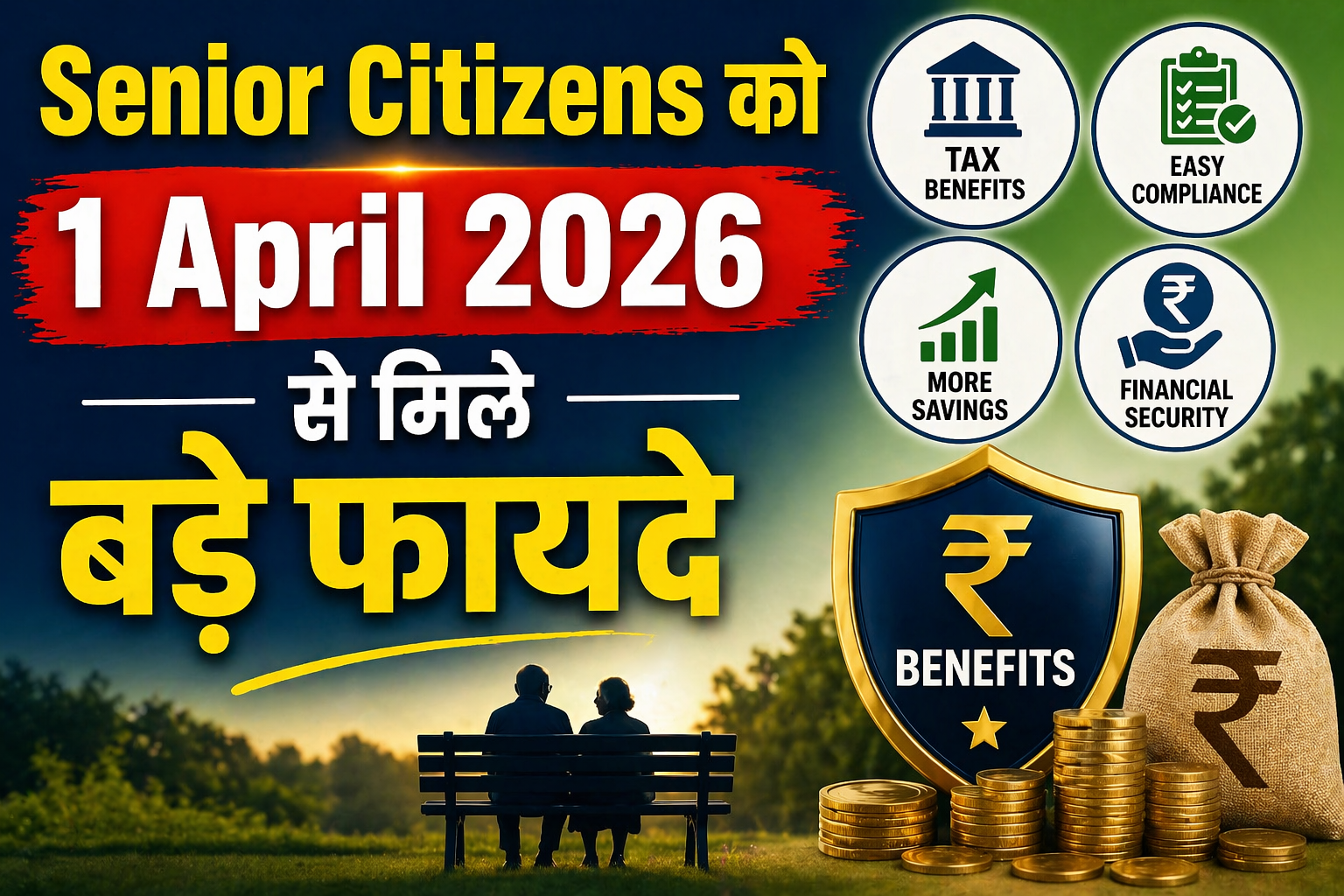
With effect from 1 April 2026, it is essential for senior citizens to have a clear understanding of the applicable income tax provisions in order to manage their finances efficiently and remain compliant with the law. Senior citizens often rely on pension, interest income, rental income, or investment income, and proper awareness of tax rules helps in optimizing tax liability while avoiding unnecessary notices or scrutiny.
👴 Who is a Senior Citizen?
| Category | Age Criteria |
|---|---|
| Normal Individual | Below 60 years |
| Senior Citizen | 60 – 79 years |
| Super Senior Citizen | 80 years and above |
👉 Important:
These benefits are available only to resident individuals. NRIs are not eligible for these specific benefits.
Under the new tax regime, which continues to be the default regime, the basic exemption limit is ₹4 lakh.
The slab rates applicable under this regime are as follows:
💰 Tax Slabs – New Tax Regime (Default)
| Income Range | Tax Rate |
|---|---|
| Up to ₹4,00,000 | Nil |
| ₹4,00,001 – ₹8,00,000 | 5% |
| ₹8,00,001 – ₹12,00,000 | 10% |
| ₹12,00,001 – ₹16,00,000 | 15% |
| ₹16,00,001 – ₹20,00,000 | 20% |
| ₹20,00,001 – ₹24,00,000 | 25% |
| Above ₹24,00,000 | 30% |
In addition to these slab rates, a rebate u/s 87A/156 available for Resident Individuals provision ensures that where total income does not exceed ₹12 lakh, the tax liability on normal income can effectively become nil.
However, this rebate is not applicable to special rate incomes such as short-term capital gains under section 111A, long-term capital gains, lottery winnings, or income from virtual digital assets, which continue to be taxed at specified rates.
Under the old tax regime, senior citizens are entitled to a higher basic exemption limit of ₹3 lakh, while super senior citizens enjoy an exemption of ₹5 lakh.
The slab rates under the old regime are 5% on income exceeding the exemption limit up to ₹5 lakh, 20% on income from ₹5 lakh to ₹10 lakh, and 30% on income above ₹10 lakh.
Additionally, the rebate under section 87A is available up to ₹5 lakh of total income in the old regime. The old regime also allows deductions such as section 80C, 80D, and others, which may make it beneficial in certain cases.
Although individuals whose income is below the exemption limit are generally not required to file an income tax return, there are specific conditions under which filing becomes mandatory regardless of income.
📄 When is ITR Filing Mandatory?
Even if income is below exemption limit, ITR filing becomes compulsory in the following cases:
💳 High TDS/TCS deducted
💰 Savings account deposits exceed ₹50 lakh
🏦 Current account transactions exceed ₹1 crore
📊 Business turnover exceeds ₹60 lakh
💼 Professional receipts exceed ₹10 lakh
✈️ Foreign travel expense exceeds ₹2 lakh
⚡ Electricity bill exceeds ₹1 lakh
🌍 Foreign assets or foreign income exists
One of the key reliefs provided to senior citizens is the exemption from payment of advance tax. Individuals aged 60 years or above who do not have income from business or profession are not required to pay advance tax during the year. However, if such individuals have business or professional income and their total tax liability exceeds ₹10,000, the provisions relating to advance tax become applicable.
In respect of interest income, senior citizens benefit from a higher threshold for tax deduction at source (TDS), generally up to ₹1 lakh per financial year. However, it is important to understand that non-deduction of TDS does not imply that the income is tax-free. Such interest income must still be reported in the income tax return and is taxable according to the applicable slab rates.
A significant compliance change is the introduction of Form 121, which replaces the earlier Forms 15G and 15H. This form allows taxpayers to declare that their total income is below the taxable limit, thereby enabling them to avoid unnecessary TDS deductions. However, this facility can be used only where the actual tax liability is nil.
A special provision exists for individuals aged 75 years and above. Where such individuals have income only from pension and interest, and both are received in a single specified bank account, they may be exempted from filing an income tax return. In such cases, the bank computes the total income after considering deductions and rebates, deducts the applicable tax, and provides a certificate. However, this benefit is subject to strict conditions, including the absence of any other source of income.
Another important concept is marginal relief, which ensures that where a taxpayer’s income slightly exceeds the rebate threshold (such as ₹12 lakh under the new regime), the additional tax payable does not exceed the additional income earned. This prevents a disproportionate increase in tax liability due to marginal increases in income.
In the context of house property, taxpayers are now allowed to treat up to two properties as self-occupied without being liable to tax on notional rent. This is a beneficial provision for individuals owning multiple residential properties that are not let out.
In addition, in cases of rental income, where the monthly rent does not exceed ₹50,000 (₹6 lakh annually), there is no requirement for the tenant to deduct tax at source, thereby easing compliance requirements.
Recent procedural changes have also been introduced in relation to return filing. For individuals and non-audit cases, the due date for filing income tax returns has been extended to 31 August, while revised returns can now be filed up to 31 March of the relevant assessment year, subject to payment of late fees where applicable.
Taxpayers also have the option to file an updated return (ITR-U) within four years from the end of the relevant assessment year, although this requires payment of additional tax ranging from 25% to 70% depending on the delay.
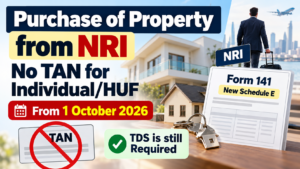
In transactions involving the purchase of immovable property from non-residents, compliance has been simplified by removing the requirement to obtain a Tax Deduction and Collection Account Number (TAN). Taxpayers can now deduct tax using their PAN, thereby reducing procedural complexity.
From a broader perspective, the income tax system has become highly digitized and data-driven. Information relating to financial transactions, tax deductions, and income is captured through systems such as the Annual Information Statement (AIS) and is cross-verified with the income tax return. Therefore, it is essential for taxpayers to ensure consistency between declared income, bank transactions, and financial records.
In conclusion, while the income tax framework provides several benefits and reliefs to senior citizens, it also emphasizes transparency and accurate reporting. By understanding the applicable provisions, maintaining proper records, and ensuring timely compliance, senior citizens can effectively manage their tax obligations and avoid potential issues with the tax authorities.
Visit www.cagurujiclasses.com for practical courses